
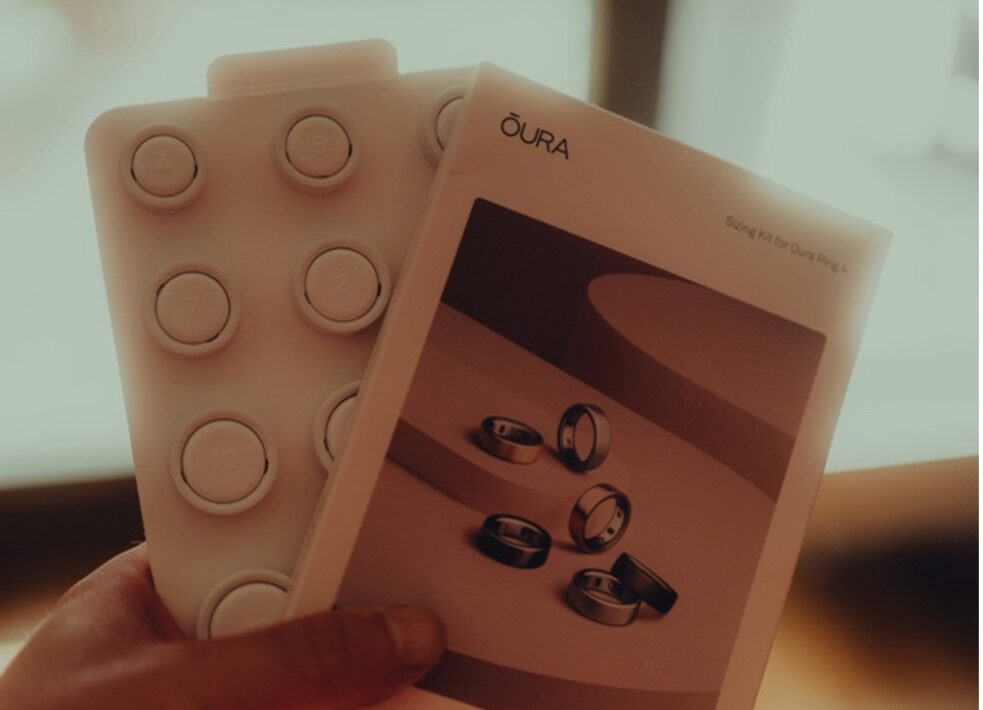
In the wake of Dobbs v. Jackson Women’s Health Organization,[1] thirteen states criminalize abortion; in these states, technology like the Oura Ring, which collects reproductive data from users, may not receive Fourth Amendment protections. What constitutes a “search” when reproductive information is managed by a third-party? Can states use the third-party doctrine to use fertility tracking data without a warrant in criminal abortion trials?[2] Under existing Fourth Amendment doctrine, this intimate data may not be a “search,” and the unsettling answer may very well be that this information can be used in trial.
Current Fourth Amendment protections have fractured over time, and courts have continued to carve out narrow holdings and exceptions limiting the Amendment’s protections against “search[es of] persons, houses, papers and effects.”[3] The Fourth Amendment prevents searches without probable cause, but if the action itself is not defined as a “search,” Fourth Amendment protections do not apply.[4] So, what is a search? For this answer, our attention must turn to Katz v. United States.[5]
The court in Katz established the Reasonable Expectation of Privacy Test (“R.E.P test”), which requires: (1) the person allegedly being searched manifest an actual (subjective) expectation of privacy, and (2) that the expectation be one that society is prepared to recognize as “reasonable.”[6] Under the R.E.P test, several cases have attempted to define “search,” in a technology driven world.[7] The significance of this developing case law, for technologies like the Oura Ring, is the third party doctrine, which essentially allows law enforcement to look at any documents, data, or other information that is accessible by a third-party, without a warrant.[8] For example, the facts in the 1979 case, Smith v. Maryland, detailed that upon the request of the police, a telephone company installed a pen register at its central office to log telephone numbers dialed from the Defendant’s home.[9] The Supreme Court reasoned when an individual voluntarily turns over private information to a third-party there can be no (1) reasonable expectation of privacy, nor a (2) social acceptance of that reasonable expectation.[10]
In 2018, the third-party doctrine was later revisited in United States v. Carpenter.[11] In that case, multiple individuals were connected to several robberies in Michigan.[12] The defendant, Timothy Carpenter, confessed to the robberies over a period of months.[13] After obtaining information about Carpenter’s accomplices, the court granted orders to search “152 days of cell-site records from MetroPCS,” and “seven days of CSLI [Cell Site Location Information] from Sprint.”[14] The Supreme Court reasoned that this advancement in technology made this type of surveillance uncharacteristically vast, which revealed “an intimate window into a person’s life, revealing not only his particular movements but through them his ‘familial, political, and professional, religious, and sexual associations.’”[15] The Court noted that prior case law, like Smith, was made before large changes in surveillance technology.[16] The Court held that turning over location data points to a wireless carrier was not truly voluntary, and that using a phone itself shouldn’t be an automatic sacrifice of privacy.[17]
Emerging from Carpenter seems to be a new test, one that should be used in the face of advancing technology, specifically, the reproductive tracking technology of the Oura Ring. Deciphered from the Court’s holding in Carpenter, the test outlines that (1) “the collection of information must be made widely possible by surveillance methods of the digital age,” (2) “the records must not be the product of a user’s meaningful voluntary choice,” and (3) the records must be of a type that tends to reveal an intimate portrait of a person’s life beyond the legitimate interests of criminal investigations . . . such as our personal associations, religious beliefs, sexual preferences, and political views.” [18]
Only three years after the Carpenter decision, in 2021, Oura Ring came out with their third-generation device, the first to include user-inputted women’s health insights, like menstrual cycle and pregnancy data.[19] The fourth-generation, released in 2024, tracks the user’s menstrual cycle phases by taking passive biometrics, such as skin temperature.[20] In addition to tracking menstrual cycles, it can estimate peak fertility and chances of conception.[21] The ring can also sync with other health apps designed for women, such as Natural Cycles, Clue, Flo, and Apple Health.[22] Similar to unlimited data location points from CSLI, devices that track every biometric of your body may implicate the Fourth Amendment in a potential prosecution. Specifically, post-Dobbs, when data irregularities could suggest the use of an abortion medication or miscarriage.[23] The Fourth Amendment implication on women’s reproductive health tracking is unclear, but applying the Carpenter test can ensure that courts adapt to this “seismic shift” in reproductive data collection by labeling it a “search.”[24]
First, the type of surveillance that could be exploited by the reproductive data that Oura Ring collects is only made possible at such a detailed and constant basis by the digital age. The Oura Ring 4 has a five to eight day long battery life, and the company recommends it’s device be worn during the day and night.[25] This results in the same constant kind of data collection the Court felt violated the Fourth Amendment in Carpenter; not to mention, the personal biometric data of each individual person is not a historically used surveillance method, like tailing someone or monitoring security footage.[26]
Second, the continuous reproductive data collection is not voluntary, even though the user purchases the ring. There are several features of the Oura Ring, including exercise tracking and sleep insights, that might be the main interest of the user for purchasing the ring, and the biometrics collected may subsequently reveal information about someone’s menstrual cycle.[27] While the Court’s analysis in Carpenter emphasizes the importance of having a phone in modern life, and how the need for one overcomes any challenge of voluntariness based on owning the phone itself, the Oura Ring is a new technology that might not be as essential as a phone.[28] Importantly, however, it has the same characteristics of a cell phone; for example, it “faithfully follows its owner beyond public thoroughfares and into private residences, doctor’s offices, political headquarters, and other potentially revealing locales,” and even reveals information about a person only a doctor might be able to access with invasive testing.[29]
Third, the records collected by the Oura Ring to determine menstrual cycle insights are of a type that tend to reveal an intimate portrait of a person’s life, such as exposing the sexual or general health about an individual. A women’s reproductive health is among the most intimate types of information. Patterns such as temperature fluctuations, a missed menstrual cycle, or sudden imbalances in the body that could suggest significant biological events can create a timeline of deeply personal information. Like the CSLI in Carpenter, the spirit of the Courts holding was to protect the kind of information that revealed a chronicle of a person’s life, especially when the data is continuously and often passively collected.[30]
Therefore, the information collected by a user’s Oura Ring is a “search” under the Carpenter test. This kind of information is deeply personal, only available because of the increased sophistication of technology that is involuntarily collected. Applying Carpenter might be the solution in a world where a small ring can reveal the most private parts of your life and body to law enforcement. The Fourth Amendment “search” protections should not be barred from extending to this kind of data simply because it passes through a third party. If the Constitution cannot shield the data generated by an individual’s own body, then its promise of security in our “persons” hollows.
[1] See generally Dobbs v. Jackson Women’s Health Org., 597 U.S. 215 (2022) (overruling Roe v. Wade, holding the Constitution does not provide a right to an abortion).
[2] Dmitry Gorin, The Third-Party Doctrine and The Fourth Amendment, Eisner Gorin llp (Dec. 8, 2023), https://www.thefederalcriminalattorneys.com/third-party-doctrine (last visited Mar. 24, 2026).
[3] U.S. Const. amend. IV.
[4] Probable Cause, Black’s Law Dictionary (12th ed. 2024) (“Under the Fourth Amendment, probable cause — which amounts to more than a bare suspicion but less than evidence that would justify a conviction — must be shown before an arrest warrant or search warrant may be issued.”); Stephen A. Saltzburg et al., American Criminal Procedure 36 (Thomson West, 12th ed. 2022).
[5] Katz v. United States, 389 U.S. 347, 353 (1967).
[6] Id. at 360–61.
[7] See United States v. Knotts, 460 U.S. 276 (1983) (holding that it is not a violation of the Fourth Amendment when law enforcement put a radio beeper into a package to track the recipient’s movements); United States v. Karo, 468 U.S. 705 (1984) (holding that a beeper attached to a can violated the Fourth Amendment, turning on the fact that the defendant took the can into his home, and if it had not been taken into his private home, it would not have violated the Fourth Amendment).
[8] See United States v. Miller, 425 U.S. 435 (1976) (holding that financial bank records subpoenaed to a bank were not a “search” under the Fourth Amendment because there was not reasonable expectation of privacy in those records).
[9] Smith v. Maryland, 442 U.S. 735, 737 (1979).
[10] Id. at 743–44.
[11] Carpenter v. United States, 585 U.S. 296, 306 (2018).
[12] Id. at 301–03.
[13] Id.
[14] Carpenter, 585 U.S. at 311.
[15] Id. (citing Sotomayor J. opinion in United States v. Jones).
[16] Id. at 298.
[17] Id. at 310, 315.
[18] Orin S. Kerr, Implementing Carpenter, in The Digital Fourth Amendment (Oxford U. Press) (forthcoming), https://papers.ssrn.com/sol3/papers.cfm?abstract_id=3301257.
[19] Previous Oura Ring Generations,Ōura,https://support.ouraring.com/hc/en-us/articles/360025570153-Previous-Oura-Ring-Generations#h01KGR3PC13YY015ZSAZP4XX6ZV (last visited Feb. 26, 2026).
[20] Women’s Health,Ōura,https://ouraring.com/womens-health (last visited Feb. 26, 2026).
[21] Id.
[22] Id.
[23] Bridget G. Kelly & Maniza Habib, Missed Period? The Significance of Period-Tracking Applications in a Post-Roe America,Nat’l Libr. of Med.: Sexual & Reprod. Health Matters(Sep. 8, 2023), https://pmc.ncbi.nlm.nih.gov/articles/PMC10494721 [https://doi.org/10.1080/26410397.2023.2238940].
[24] Carpenter v. United States, 585 U.S. 296, 311 (2018).
[25]General FAQs: Battery and Charging, Ōura,https://support.ouraring.com/hc/en-us/articles/4408961184147-General-FAQs (last visited Mar. 21, 2026); General FAQs: Wearing and Usage, Ōura,https://support.ouraring.com/hc/en-us/articles/4408961184147-General-FAQs (last visited Feb. 26, 2026).
[26] Aparna Bhattacharya, The Impact of Carpenter v. United States on Digital Age Technologies, 29 S. Cal. Interdisc. L.J. 489, 505 (2020) (explaining the difference between information accessible from traditional police practices and information only available with new technology).
[27] General FAQs: Oura App Features, Ōura,https://support.ouraring.com/hc/en-us/articles/4408961184147-General-FAQs (last visited Mar. 24, 2026).
[28] Carpenter, 585 U.S. at 298.
[29] Id. at 310.
[30] Id. at 320.