
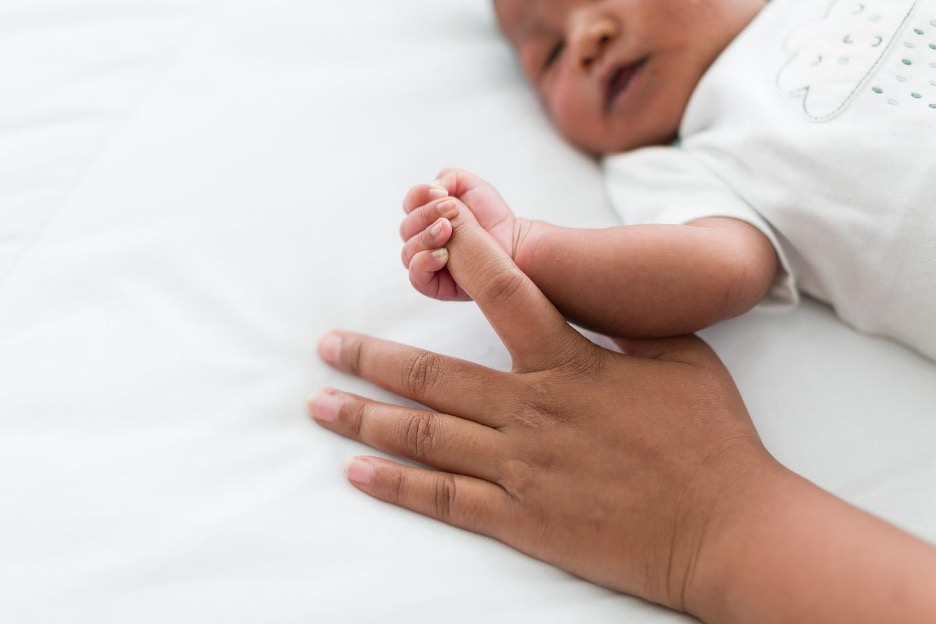
A recent regional court decision in Murcia, Spain entitles single parents to the full amount of paid parental leave previously permitted only to married couples.[1] The regional court decision emerged from a Spanish constitutional court decision in November 2024, which prohibited discrimination against single parents’ children.[2]
In 2022, Silvia Pardo Moreno became a single mother,[3] joining the nearly 166,000 single mothers in Spain.[4] Ms. Moreno’s request for 32 weeks of paid parental leave was denied, so she went back to work after only 16 weeks.[5] She was unsettled by the fact that her daughter was the only four-month-old at the daycare because the other children’s parents were entitled to 32 weeks of paid parental leave.[6] Citing the constitutional court[7] in its rationale, the regional court noted “[t]he duration and intensity of the need to care for a newborn are the same, regardless of the family model into which he or she was born.”[8] While Spain joins the ranks among other European countries expanding access to paid leave for single parents,[9] the United States is further isolated in providing paid parental leave irrespective of family status.[10]
Of all the 38 member countries of the Organization for Economic Co-operation and Development (OECD), which spans the world, the U.S. is the only member without a national paid parental leave program.[11] Instead, the U.S. outsources this decision largely to states and employers. Several states implemented mandatory paid leave, either through a social insurance policy system or a private insurance system.[12] Other states allow employers the discretion to create family leave policies as paid for through payroll contributions.[13] Regardless of the source, about 27% of all workers in the U.S. had access to paid parental leave in 2023.[14] This lack of state-mandated parental leave starkly contrasts with nationally mandated programs in most European nations.[15]
One reason for this divergence rests on the lasting effects of World War Two. Following post-war devastation in Europe and declining population numbers, many European countries began to adopt policies like national paid maternal leave to encourage growing families with bolstered government support.[16] Meanwhile, the U.S. did not share the same post-war population loss or economic downfall.[17] The split approaches reflected contrasting ideological approaches to post-war recovery. Specifically, European countries focused on building up a welfare state “to create the social and economic stability and solidarity needed to support democracy.”[18] In the U.S., individualism grew alongside a corresponding antipathy towards social welfare policies resembling those in the Soviet Union.[19]
Echoing the stance of many European countries, some researchers support a national paid parental leave program in the U.S., highlighting benefits for businesses,[20] the economy,[21] and overall improved health outcomes for the family unit.[22] More in line with the “market fundamentalism” approach that has historically influenced U.S. policy,[23] some suggest that the private market has already responded to rising employee demands by increasing access to paid parental leave.[24] Further, those against a paid leave mandate argue it may harm businesses, [25] the economy,[26] and those seeking leave themselves.[27]
One scholar highlighted the dilemma that American citizens are in: 82% of Americans are in support of paid parental leave, but only 47% think the government should fund it.[28] With increased support for paid parental leave and the current administration’s emphasis on promoting strong, stable families,[29] will paid parental leave be included in these family values?
[1] José Bautista & Amelia Nierenberg, Single Parents Should Get as Much Paid Leave as Couples, Spanish Court Rules, N.Y. Times (Jan. 22, 2025), https://www.nytimes.com/2025/01/22/world/europe/spain-single-parents-paid-leave.html.
[2] Id.
[3] Conor Faulkner, More babies born to unmarried parents than ever in Spain, The Local (Nov. 23, 2023), https://www.thelocal.es/20231123/more-babies-born-to-unmarried-parents-than-ever-in-spain.
[4] Bautista & Nierenberg, supra note 1.
[5] Id.
[6] Id.
[7] S.T.C., Nov. 6, 2024 (S.T.C., No. 294, p. 166617) (Spain).
[8] Bautista & Nierenberg, supra note 1.
[9] Id.
[10] See generally Family and Medical Leave Act of 1993, 29 U.S.C. §§ 2601 (allowing certain employees to take unpaid leave for certain family or medical reasons); see also Family and Medical Leave Act (FMLA), U.S. Dep’t of Lab., https://www.dol.gov/general/topic/benefits-leave/fmla (last visited Feb. 23, 2025) (explaining the eligibility requirements one must meet to qualify for the unpaid family and medical leave, which does not include considerations of whether the employee is married nor if the employee is the mother or father).
[11] Kathleen Romig & Kathleen Bryant, A National Paid Leave Program Would Help Workers, Families, Ctr. on Budget & Pol’y Priorities 1,1 (April 27, 2021), https://www.cbpp.org/sites/default/files/4-27-21bud.pdf.
[12] State Paid Family Leave Laws Across the U.S., Bipartisan Pol’y Ctr. (Aug. 5, 2024), https://bipartisanpolicy.org/explainer/state-paid-family-leave-laws-across-the-u-s.
[13] Molly Weston Williamson, The State of Paid Family and Medical Leave in the U.S. in 2025, Ctr. for Am. Progress (Jan. 15, 2025), https://www.americanprogress.org/article/the-state-of-paid-family-and-medical-leave-in-the-u-s-in-2025.
[14] What data does the BLS publish on family leave?, U.S. Bureau Lab. of Stat. (Sept. 21, 2023), https://www.bls.gov/ebs/factsheets/family-leave-benefits-fact-sheet.htm.
[15] There are 141 countries that offer some type of maternity leave and, of the 141 countries, 34 countries mandate paid parental leave. There are only seven countries that do not mandate paid leave, including the U.S, Papua New Guinea, and a few countries in the Pacific Islands. See Janelle Watson, Countries with Paid Maternity: How the US Compares, Justworks: Blog (Sept 17. 2024), https://www.justworks.com/blog/countries-with-paid-maternity-leave#parental-leave-and-paternity-leave.
[16] Krystin Arneson, Why doesn’t the US have mandated paid maternity leave?, BBC (June 28, 2021), https://www.bbc.com/worklife/article/20210624-why-doesnt-the-us-have-mandated-paid-maternity-leave.
[17] Id.
[18] Id.
[19] Id.
[20] See Romig & Bryant, supra note 11, at 5 (finding paid leave improves worker retention and productivity, while potentially cutting costs that would usually be associated with employee turnover and encouraging continued “labor force participation” of women); see also Sina Chehrazi, Why Paid Leave Is Crucial For Your Business, Forbes: Innovation (May 12, 2022, 8:45 AM), https://www.forbes.com/councils/forbestechcouncil/2022/05/12/why-paid-leave-is-crucial-for-your-business (explaining that businesses who wish to retain the best talent should prioritize implementing paid parental leave policies to find employees willing to align their goals and growth with that of the company they work for).
[21] See Eileen Appelbaum & Ruth Milkman, Leaves That Pay: Employer and Worker Experiences with Paid Family Leave in California, Ctr. for Econ. & Pol’y Rsch. (2011), http://www.cepr.net/documents/publications/paid-family-leave-1-2011.pdf (stating access to paid family leave led to increased likelihood that workers would return to their same job); see also Qi Li, et. al., Attitudes about Paid Parental Leave in the United States, 55 Socio. Focus 48, 48 (2022) (“[T]here is evidence that paid parental leave helps to maintain similar levels of household income during spells of caregiving needs surrounding a birth, supports mothers’ continued labor force participation after a birth . . . .”).
[22] See Romig & Bryant, supra note 11, at 6–7 (stating paid parental leave supports child development, improved maternal health, and economic security for the family); see also Adam Burtle & Stephen Bezruchka, Population Health and Paid Parental Leave: What the United States Can Learn from Two Decades of Research, 4(2) Healthcare (Basel) 30, 35 (2016) (stating the same benefits and noting these benefits almost doubled for “children of mothers who were educationally disadvantaged . . . .”).
[23] In the 1970s, Milton Friedman wrote an essay for The New York Times Magazine entitled “The Social Responsibility of Business Is to Increase Its Profits.” Friedman’s essay conveyed his free market ideology, which changed the future of economics and policy-making, See, e.g., A Free Market Manifesto That Changed the World, Reconsidered, N.Y. Times: DealBook (Sept. 12, 2020), https://www.nytimes.com/2020/09/11/business/dealbook/milton-friedman-doctrine-social-responsibility-of-business.html (Statement of Felicia Wong) (“Friedman’s ideas were championed and carried to power — all the way to the White House — by social conservatives, from Orange County evangelicals to Ronald Reagan, who did indeed apply his doctrine to ‘every human activity.’”); see also Thomas J. Fiala & Deborah Duncan Owens, Education Policy and Friedmanomics: Free Market Ideology and Its Impact on School Reform, ERIC Inst. Educ. Sci. 1, 22–23 (Apr. 23, 2010), https://files.eric.ed.gov/fulltext/ED510611.pdf (stating Friedman identified the U.S. public school system as “an island of socialism in a free market society” that required free market reform, which inevitably led to the privatization of public schools through school choice, charter schools, and vouchers).
[24] See Vanessa Brown Calder, Parental Leave: Is There a Case for Government Action?, CATO Institute: Pol’y Analysis 1, 4 (Oct. 2, 2018), https://www.cato.org/sites/cato.org/files/pubs/pdf/pa850.pdf (stating that first-time mothers are reporting a 45% increase in using paid lave and/or disability over the past 50 years, which suggests the market is accurately responding to demand).
[25] See id. at 7 (stating employers would have to actively offset costs by reducing wages as result of increased mandated leave but may be unable to because of minimum wage laws or union contracts, thus facing the brunt of the costs); see also Christopher J. Ruhm, The Economic Consequences of Parental Leave Mandates: Lessons from Europe, 113(1) Q. J. Econ. 285, 314 (“As the leave entitlement lengthens, it is likely to become much harder to schedule replacement workers, particularly in countries placing restrictions on the duration of employment on temporary fixed-term contracts.”).
[26] See Rachel Greszler, Americans Want a National Paid Family Leave Program—But Not If They Have to Pay For It: New Survey, Heritage Found.: Backgrounder 1, 3 (Jan. 24, 2019), https://www.heritage.org/sites/default/files/2019-01/BG3376_0.pdf (“The American Action Forum estimated that enacting a national paid family leave program that provided 16 weeks of paid leave with benefits of up to $1,000 per week would cost at least $1,800 in additional taxes for the average worker, and could cost as much as $11,000 in additional taxes each year.”); see also Calder, supra note 24, at 7 (describing a study of California’s required paid leave program in which unemployment “for childbearing age women [increased] by 5 to 22 percent . . .”).
[27] See Calder, supra note 24, at 7 (noting employers may react to the increased costs of a mandate by hiring less women and promoting fewer women to leadership roles); see also Nita Ghei, The Argument Against Paid Family Leave, Newsweek (Feb. 10, 2016), https://www.newsweek.com/argument-against-paid-family-leave-78741 (describing the unintended, discriminatory effects of the enactment of the ADA and the possibility a paid leave mandate will have the same effect on women, which would result in employers preemptively hiring women less); see also Ruhm, supra note 25 (stating extended parental leave may result in declining experience levels, which, in turn, could reduce wages for women).
[28] Li, et. al., supra note 21, at 62. These results came from the 2012 General Social Survey (GSS), which provided survey data of 1,189 adult Americans that were asked about attitudes toward paid parental leave. See id. at 55–56 (“In the survey, respondents were asked, ‘Consider a couple who both work full-time and now have a new born child. One of them stops working for some time to care for their child. Do you think there should be paid leave available and, if so, for how long?’ Respondents who supported paid parental leave availability were then asked who should pay for this leave: a) the government, b) the employer, c) both, or d) other sources.”).
[29] See, e.g., Haley Strack, ‘America Is a Pro-Family Country’: JD Vance Reaffirms Trump Administration’s Commitment to Life, Nat’l Rev. (Jan. 24, 2025), https://www.nationalreview.com/news/america-is-a-pro-family-country-jd-vance-reaffirms-trump-administrations-commitment-to-life/ (Statement of Vice President, JD Vance) (“So let me say very simply: I want more babies in the United States of America. I want more happy children in our country, and I want beautiful young men and women who are eager to welcome them into the world and eager to raise them.”).