
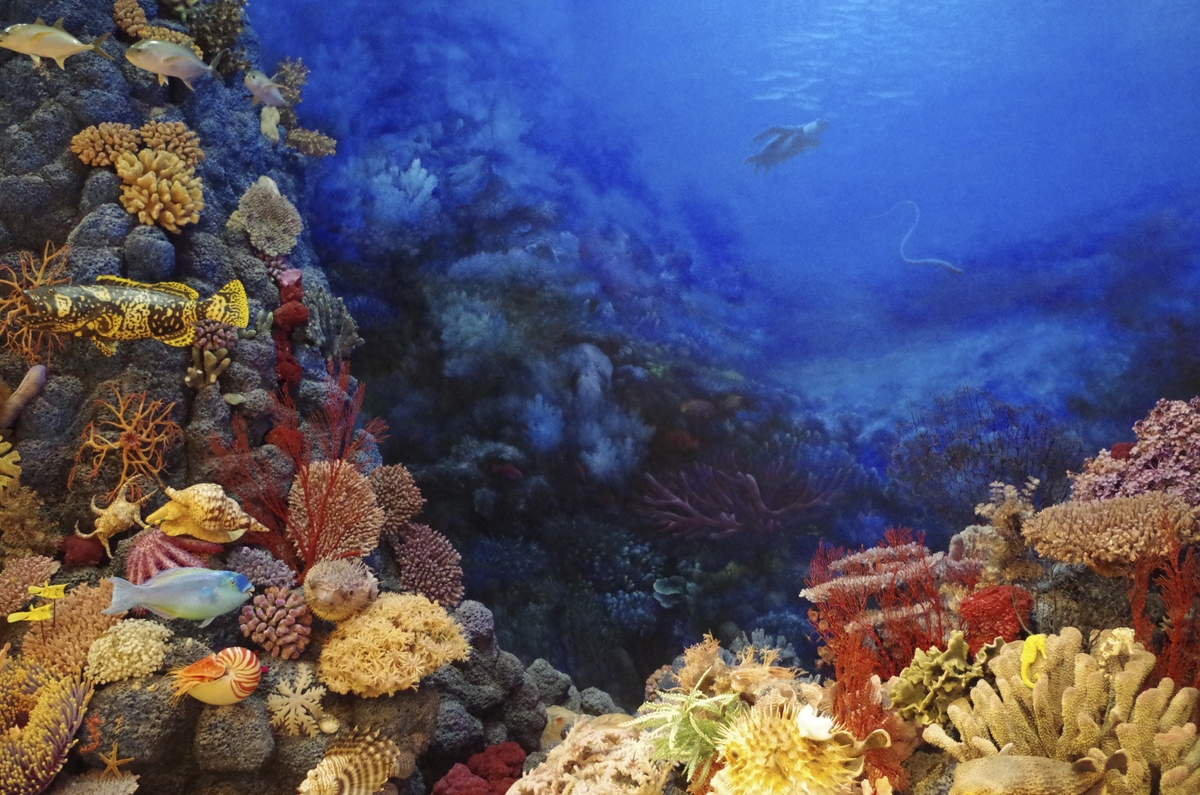
Deep-sea mining is a decades-old practice. As countries consider commercializing the deep-sea mining industry to meet the increasing demand for minerals, concerns over the industry’s environmental impacts are growing. The ocean is vital to life on Earth, making up over 70% of the Earth’s surface and containing up to 80% of all life. In addition to supporting over half the life on Earth, the ocean is one of the biggest carbon sinks, meaning that it absorbs large quantities of the carbon produced by humans, removing it from the atmosphere. The global call for sustainable use of the ocean is growing more prominent as the ocean is essential to reducing the effects of climate change. The American Seabed Protection Act is crucial legislation that Congress must pass to further its environmental and sustainability goals.
Deep-sea mining threatens the ocean and worsens climate change. The mining process involves drilling into the seabed to extract minerals and gasses, posing potential threats to the ecosystem and carbon storage ability during and after drilling.[1] Environmental threats include (1) the death of organisms, (2) increased acidification in the mining area, (3) sediment plumes, (4) increased noise, and (5) the displacement of various fish populations in the area.[2] Because deep-sea mining occurs in both international and domestic waters, regulation of the practice is important to protect the exploitation of the global commons and the environment.[3]
In light of these efforts to protect the ocean from exploitation, countries and manufacturers have recently expressed concern about the impacts of deep-sea mining. For example, France, Germany,[4] Microsoft, and Volvo have all voiced their concerns over deep-sea mining. Now, the increased concern over deep-sea mining has reached Congress. On July 11, 2023, Representative Ed Case (D-Hawaii), along with five other representatives from four additional states, introduced the American Seabed Protection Act.[5] The purpose of the American Seabed Protection Act is to “prohibit certain mining activities on the deep seabed and Outer Continental Shelf” until further research establishes the impacts of mining on the marine environment.[6] The American Seabed Protection Act provides a framework for a comprehensive impact study of deep-sea mining that would include a description of the impacted ecosystems, an assessment of potential impacts from mining, the capacity for the sequestering of greenhouse gases, sediment plume impacts, and an assessment of alternatives to the minerals mined.[7]
Congress has the unique ability to enact legislation that can make provisions of international law enforceable in the United States. The United Nations (“UN”) has set guidelines for ocean conservation through Sustainable Development Goal 14, which focuses on conserving marine areas, reducing pollution in the ocean, “… [expanding] scientific knowledge, [and] develop[ing] research ….”[8] The UN has also emphasized the urge for increased research on the impacts of deep-sea mining during the Convention on Biological Diversity, stating that “before deep seabed mineral exploitation activities take place,” deep-sea mining impacts must be “sufficiently researched and [the] risks understood.”[9] As a member of the UN, the United States should uphold these goals, especially since other countries have expressed similar concerns about the impacts of deep-sea mining.
The International Seabed Authority (“ISA”) governs international waters and has been the primary source of rules and regulations for over 150 member states, including Portugal, Sweden, and Canada.[10] Recently, the ISA prohibited seabed mining until further research on the environmental impacts is conducted. Although the United States is not a member of the ISA, it collaborates with members of the ISA on other sustainability goals.[11] Additionally, the United States has followed the lead of the ISA in adopting the Deep Seabed Hard Mineral Resource Act, which established an “interim measure to allow U.S. citizens to proceed with seabed mineral exploration and recovery until an international regime was in place.”[12] Seeing how international laws have influenced the United States, the precedent set by the UN and the ISA should persuade Congress to pass the American Seabed Protection Act, which will help the United States meet these international environmental goals.
In addition to the international appeal, the United States’ commitment to protecting the ocean is evident in its domestic policies. The first Ocean Climate Action Plan, created by the Ocean Policy Committee (“Committee”) under the Biden Administration, denotes the progress and intended goals of Marine Protected Areas to protect ecosystems from the impacts of mining oil and gas.[13] Under the Ocean Climate Action Plan, the Committee will study and research carbon storage impacts from mining because the ocean is vital to carbon storage in the issue of climate change.[14] Along with the Ocean Climate Action Plan, the United States has already committed six billion dollars to research the impacts of seabed mining and other initiatives to protect the ocean. However, to protect the ocean from the detrimental impacts of deep-sea mining, more needs to be done. Several states, including California, Hawaii, Oregon, and Washington, recognized this need and have banned or are considering a ban on deep-sea mining practices. Congress should integrate the states’ concerns by passing the American Seabed Protection Act.
Opponents of the American Seabed Protection Act may argue that deep-sea mining is the future of the economy and will resolve energy problems in the United States. However, the American Seabed Protection Act is not a complete ban on deep-sea mining but rather a moratorium encouraging further research on the impacts before any mining begins.[15] Additionally, the temporary suspension could prevent massive environmental lawsuits and backlash by increasing the opportunity to gain knowledge about the mining impacts and allow companies to develop mitigation strategies, thus preventing unnecessary environmental harm. Ultimately, the American Seabed Protection Act will follow the precedent that the United States has set in its commitments to preserve biodiversity and the seabed ecosystem, therefore, Congress should pass the American Seabed Protection Act.
[1] Xingsen Guo et al., Deep seabed mining: Frontiers in engineering geology and environment, 10 Int’l J. Coal OF Sci. Tech. 1, 7 (2023),https://link.springer.com/article/10.1007/s40789-023-00580-x.
[2] Id. at 20–23.
[3] Erin A. Clancy, The Tragedy of the Global Commons, 5 IND. J. OF GLOB. LEGAL STUD. 601, 603–05 (1998), https://www.repository.law.indiana.edu/ijgls/vol5/iss2/12/?utm_source=www.repository.law.indiana.edu%2Fijgls%2Fvol5%2Fiss2%2F12&utm_medium=PDF&utm_campaign=PDFCoverPages.
[4] Int’l Inst. for Sustainable Dev., Summary of the Twenty-eight Annual Session of the International Seabed Authority (Second Part), 25 The Earth Negot. Bull. 1, 18 (2023), https://enb.iisd.org/sites/default/files/2023-07/enb25253e.pdf.
[5] American Seabed Protection Act, H.R. 4537, 118th Cong. (2023).
[6] Id.
[7] Id.
[8] G.A. Res. 70/1, at 23–24 (Oct. 21, 2015).
[9] U.N. Conference on the Parties to the Convention on Biological Diversity, Conservation and sustainable use of marine and coastal biodiversity, at 16, U.N. Doc. CBD/COP/DEC/15/24 (Dec. 19, 2022), https://www.cbd.int/doc/decisions/cop-15/cop-15-dec-24-en.pdf.
[10] Int’l Inst. for Sustainable Dev., supra note 4, at 18.
[11] Caitlin Keating-Bitonti, Cong. Rsch. Serv., R47324, Seabed Mining in Areas Beyond National Jurisdiction: Issues for Congress, at 7 (2022).
[12] Id. at 6.
[13] The Ocean Pol’y Comm., Ocean Climate Action Plan, at 53 (2023), https://www.whitehouse.gov/wp-content/uploads/2023/03/Ocean-Climate-Action-Plan_Final.pdf.
[14] Id. at 90.
[15] American Seabed Protection Act, supra note 5.