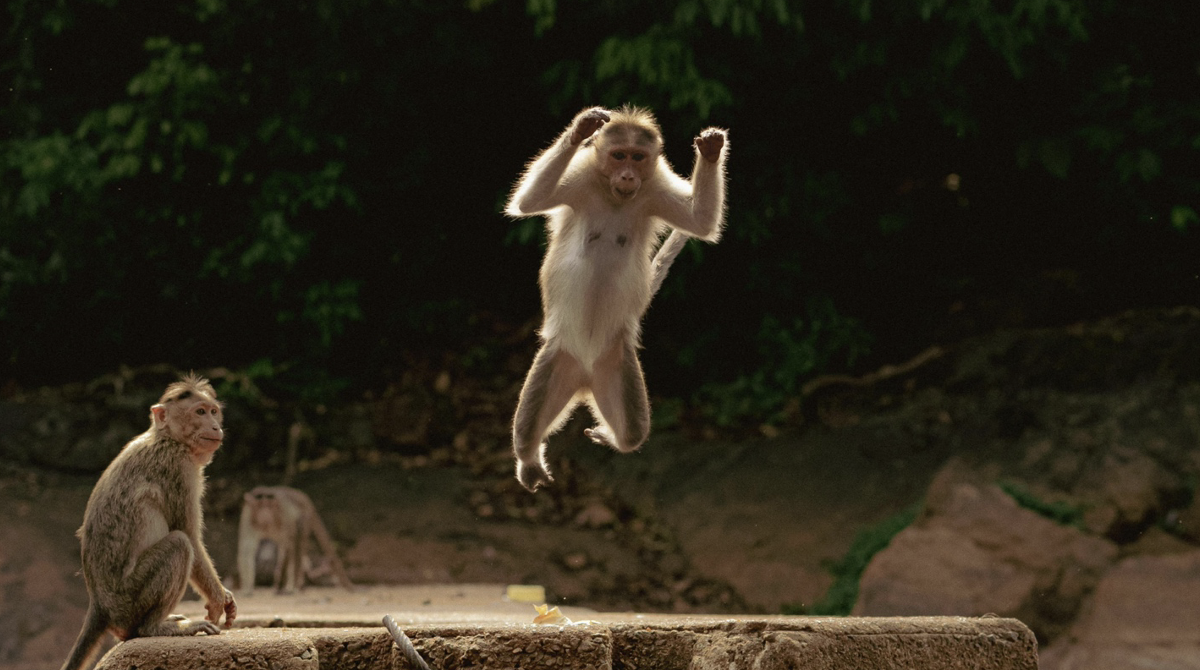
“Murray has spent more than 40 years and over $50 million taxpayer dollars isolating, caging, and then deliberately damaging macaques’ brains without leading to any new treatments or cures for mental health issues in humans.”[1] This powerful statement epitomizes the way that research primates are abused in the United States, and the reason why in March 2025, People for the Ethical Treatment of Animals (PETA) filed suit against the National Institute of Mental Health (NIMH) and the National Institutes of Health (NIH), as well as their respective directors, to fight for the rights of monkeys and apes detained and tortured in government laboratories.[2]
PETA’s decision to file suit against the aforementioned government entities arose after the agencies’ denial of PETA’s request to install an audio-visual live feed of the rhesus macaques currently caged at Dr. Elizabeth Murray’s Laboratory in Bethesda, Maryland.[3] PETA claimed that the government’s refusal to install a broadcast of the macaques inside the laboratory was a violation of PETA’s First Amendment right to “receive communications from willing speakers.”[4] The United States District Court for the District of Maryland did not address this argument, dismissing the case on entirely procedural grounds.[5] The court ruled that PETA did not have subject matter jurisdiction due to government agencies possessing sovereign immunity from suit absent consent through legislation, which NIMH and NIH did not grant.[6] Additionally, the court opined that the injury asserted by PETA was too overly broad to be granted standing under Article III of the Constitution (which provides that a court only has the power to hear live cases and controversies), holding that the plaintiff had no “constitutionally protected interest in receiving communications from the macaques.”[7]
While the lawsuit in federal court may have ended in a procedural roadblock, the true result is much greater than a routine dismissal: People for the Ethical Treatment of Animals, Inc. v. National Institute of Mental Health will bring more attention to the horrid conditions that primates are forced to endure in government laboratories, and spark calls for change. PETA and other animal rights advocates are far from surrendering in the fight against barbaric laws permitting testing on primates. In 2023, the Animal Legal Defense Fund (ALDF) secured a monumental victory for primates, successfully suing the United States Department of Agriculture (USDA) for violations of the Administrative Procedure Act (APA) stemming from the USDA’s wrongful dismissal of a 2014 rulemaking petition calling for the agency to improve their inadequate standards governing the “psychological well-being of nonhuman primates used in laboratory research.”[8] Not only did this victory force the USDA to reexamine its Animal Welfare Act (which had not updated its regulations regarding primates since 1991), it also demonstrated the APA as a successful channel for animal rights activists to implement change, which may ultimately be more fruitful than pursuing constitutional challenges.[9]
Although the First Amendment challenge in People for the Ethical Treatment of Animals, Inc. v. National Institute of Mental Health was swiftly dismissed, it does not mean that all constitutional claims regarding the rights of primates should be abandoned.[10] One particularly interesting avenue taken by the Nonhuman Rights Project (NhRP) was to file petitions for habeas corpus on behalf of two chimpanzees, Tommy and Kiko, who were held in small cages in a warehouse and storefront, respectively.[11] In denying the petitions, a New York state court explained that “chimpanzees cannot bear any legal duties, submit to societal responsibilities or be held legally accountable for their actions” and therefore, it would be “inappropriate to confer upon chimpanzees … the fundamental right to liberty protected by the writ of habeas corpus.”[12]
However, this “societal responsibilities test” has flaws. On appeal, the NhRP argued that both infants and mentally incapacitated adults possess the right to habeas corpus, despite not fully comprehending that they owe a societal duty or possess legal responsibilities.[13] Furthermore, NhRP pointed to the fact that legal “personhood” is not synonymous with being a human person; in the U.S. legal tradition, both corporations and ships are considered “persons” for legal purposes.[14] Unfortunately, the NhRP’s contention that primates could possess “personhood” in the eyes of the law was gruffly rebutted without much consideration by the majority of the court, and further appeal to the Court of Appeals of New York (the state’s highest court) was denied.[15] This denial was not a complete loss for animal activists, however. In a concurring opinion, Judge Eugene Fahey acknowledged the possibility of expanding primate rights in the future when he explained that “[t]he issue of whether a nonhuman animal has a fundamental right to liberty protected by the writ of habeas corpus is profound and far-reaching.”[16] He concluded his concurrence with a powerful proclamation: “While it may be arguable that a [nonhuman primate] is not a “person,” there is no doubt that it is not merely a thing.”[17]
Though animal rights activists have made great strides in creating a better future for monkeys and apes, the United States is still bounds behind other developed nations when it comes to protecting primates. For example, in New Zealand, the Animal Welfare Act of 1999 outright banned testing on chimpanzees, bonobos, gorillas, and orangutans (except for when the testing is in the best interest of the primate itself), and enacted extremely rigid standards that require approval from an accredited Animal Ethics Committee for testing on all other primates.[18] Austria has taken the New Zealand ban even further by including gibbons in this prohibition.[19] Perhaps most significantly, the European Union has implemented Directive 2010/63/EU, which among other animal protection laws, bans testing on primates except for in “biomedical areas essential for the benefit of human beings, for which no other alternative replacement methods are yet available.”[20]
Ultimately, if justice is to be achieved for primates across the United States, it starts with dedicated individuals determined to make a change. This has already been demonstrated by groups such as PETA, the ALDF, and the NhRB taking the fight to the government to end the wrongful confinement of monkeys and apes. While not all litigation has been successful, every case filed continues to bring more attention to the mistreatment of primates in our country, both in government labs and beyond. By using our voices, staying vigilant, and challenging the existing status quo, hopefully one day the United States will enact laws like those adopted around the world, and eventually end the testing, torture, and unjust treatment of primates.
[1] Complaint, People for the Ethical Treatment of Animals, Inc. v. Nat’l Inst. of Mental Health, No. 8:25-cv-00736-PX, 2026 WL 439219 (D. Md. Mar. 6, 2025).
[2] Id. ¶ 1.
[3] People for the Ethical Treatment of Animals, Inc. v. Nat’l Inst. of Mental Health, No. 8:25-cv-00736-PX, 2026 WL 439219, at *1 (D. Md. Feb. 13, 2026).
[4] Complaint, supra note 1, ¶ 2, (citing Va. State Bd. of Pharmacy v. Va. Citizens Consumer Council, Inc., 425 U.S. 748, 756-757 (1976); Kleindienst v. Mandel, 408 U.S. 753, 764-65 (1972); Heyer v. United States Board of Prisons, 849 F.3d. 202, 218 (4th Cir. 2017)).
[5] People for the Ethical Treatment of Animals, Inc., 2026 WL 439219, at *2.
[6] Id. at *2-5 (citing Welch v. United States, 409 F.3d 646, 650 (4th Cir. 2005); Kerns v. United States, 585 F.3d 187, 193-194 (4th Cir. 2009) (holding NIMH’s refusal to install a live feed in the laboratory satisfied none of the necessary criteria for judicial intervention, and thus the agency had sovereign immunity from suit)).
[7] Id. at *5-6 (citing U.S. Const. art. III, § 2).
[8] New England Anti-Vivisection Society v. Goldentyer, No. 8:20-cv-02004-JRR, 2023 WL 2610867, at *1 (D. Md. Mar. 23, 2023).
[9] Id. at *2.
[10] People for the Ethical Treatment of Animals, 2026 WL 439219, at *6.
[11] Craig Kauffman et. al., New York (USA) Court Case: Nonhuman Rights Project v. Lavery, Ecojurisprudence Monitor (2025), https://ecojurisprudence.org/initiatives/nonhuman-rights-project-v-lavery; See U.S. Const. art. I, § 9; 70 NY CPLR § 7002(a) (McKinney).
[12] People ex rel. Nonhuman Rights Project, Inc. v. Lavery, 124 A.D.3d 148, 152 (N.Y. App. Div. 2014).
[13] Matter of Nonhuman Rights Project, Inc. v. Lavery, 152 A.D.3d 73, 78 (N.Y. App. Div. 2017); Nicole Pallotta, Though Denied by New York Court of Appeals, Habeas Corpus Claim for Chimpanzees Prompts Reflection, Animal Legal Def. Fund: Animal L. Update (Sep. 7, 2018), https://aldf.org/article/though-denied-by-new-york-court-of-appeals-habeas-corpus-claim-for-chimpanzees-prompts-reflection.
[14] Matter of Nonhuman Rights Project, Inc., 152 A.D.3d at 79 (citing Santa Clara County v. Southern Pacific R. Co., 118 U.S. 394 (1886)); Pallotta, supra note 13.
[15] Matter of Nonhuman Rights Project, Inc., 152 A.D.3d at 79 (“Petitioner’s additional argument that ‘person’ need not mean ‘human’ . . . is not relevant . . . and certainly is of no guidance to the entitlement of habeas relief by nonhumans in New York”).
[16] Matter of Nonhuman Rights Project, Inc. v. Lavery, 100 N.E.3d 846, 849 (N.Y. 2018) (Lahey, J., concurring).
[17] Id.
[18] Animal Welfare Act 1999, pt 6, s 85 (N.Z.); Animal Welfare Act 1999, pt 6, ss 98-104 (N.Z.).
[19] Tierversuchsgesetz 2012 [Animal Experimentation Act 2012] Bundesgesetzblatt [BGBl I] No. 114/2012, as amended, § 4 https://www.ris.bka.gv.at/GeltendeFassung.wxe?Abfrage=Bundesnormen&Gesetzesnummer=20008142 (Austria); see also Andrew Knight, Abstract, The beginning of the end for chimpanzee experiments?, 3 Phil. Ethics Human. Med. 16 (2008), https://pmc.ncbi.nlm.nih.gov/articles/PMC2432070 (Discussing a chimpanzee in Austria named Matthew, who was the subject of a legal campaign to grant “personhood” to apes).
[20] Directive 2010/63/EU, of the European Parliament and of the Council of 22 September 2010 on the Protection of Animals Used for Scientific Purposes, art. 17, 2010 O.J. (L 276) 33, 34.