
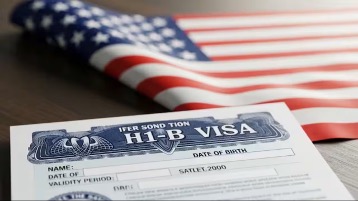
On September 19, 2025, President Trump issued a presidential proclamation titled “Restriction on Entry of Certain Nonimmigrant Workers” (the “Proclamation”).[1] The Proclamation, conditions the entry of H-1B specialty-occupation workers on an employer’s payment of $100,000 fee.[2] During the Proclamation signing conference, government officials described the measure as a quick and effective response to perceived labor-market distortions.[3] The White House believed that this measure could lead the agencies to implement the requirements.
The Proclamation instantly caused worry among foreign individuals looking to obtain an H1-B visa. The United Citizenship and Immigration Services (“USCIS”) followed with guidance clarifying that the Proclamation only applies to new H-1B petition filed at or after 12:01 a.m. ET on September 21, 2025.[4] If the petitions were filed after that deadline, they must be accompanied by a $100,000 payment.[5] Therefore, H1-B filings that were processed before that timestamp are not required to include the $100,000 payment. USCIS also circulated an implementation memorandum to adjudicators, reinforcing effective dates and fee-submission expectations.[6]
This change to H-1B visas was not the only recent shift in federal regulation of nonimmigrant workers. Within days of the Proclamation, USCIS signaled a broader programmatic shift by publishing a proposal to move away from selecting H1-B visa holders on a pure lottery system.[7] Instead, the new system prefers a weighted selection that would favor higher-paid registrations.[8] This change is being seen by legal practitioners as creating a system that favors wage-level or salary-based factors instead of a pure lottery system.[9]
There has been a mix of public response to the Proclamation. Trade publications and law firms reported that many employers, including companies in the tech, healthcare, and higher education industries, are reassessing and reevaluating talent strategies and hiring procedures.[10] On the other hand, some advocacy groups against the Proclamation have warned of short-term labor force disruptions.[11] These advocacy groups fear some industries will not be able to quickly replenish their workers and would suffer economic losses.[12] Legal experts also emphasized potential knock-on effects for both U.S. and foreign workers and discussed that litigation may be on the horizon as the government seeks to implement these changes.[13]
Currently, there is a debate about whether President Trump’s $100,000 H-1B fee and entry restrictions exceed his statutory and constitutional authority. Proponents of the Proclamation argue that the administration will likely heavily rely on 8 U.S.C. § 1182(f), which grants the President the power restrict H1-B visa entry requirements.[14] It provides that “[w]henever the President finds that the entry of any aliens or of any class of aliens … would be detrimental to the interests of the United States (U.S.) he may by proclamation,…, suspend the entry of all aliens or any class of aliens … or impose on the entry of aliens any restrictions he may deem to be appropriate.”[15] Therefore, the issuance of the fee is a permissible “restriction” on entry of a class of nonimmigrants if the current H-1B requirements are deemed by the administration to be harmful. As iterated many times during the signing conference and media coverage, underregulated H-1B causes harms to Americans by displacing United States workers and suppressing wages.[16] In addition, courts have historically given significant deference to executive and legislative actions in immigration, especially on the issue concerning nonimmigrant H1-B admission to the U.S.[17] In addition, the plenary power doctrine gives the political branches broad authority over immigration policy.[18] Here, the plenary power doctrine refers to the idea that Congress and the executive branch have broad and largely unreviewable authority over immigration and the admission or exclusion of noncitizens.[19] For example, in Trump v. Hawaii, the Court held that “[t]he President has lawfully exercised the broad discretion granted to him under § 1182(f) to suspend the entry of aliens into the United States.”[20] Last but not least, the current administration may argue that the executive may calibrate fees and conditions on foreign entry to offset externalities or burdens on domestic labor markets.[21]
A central counterargument is that Congress has not granted the president explicit authority to impose a $100,000 charge on H-1B petitioners or any amount beyond what is needed to cover administrative costs. Under current law, USCIS fee authority is constrained: fees must generally be tied to the cost of adjudication rather than used as a method for revenue-raising.[22] Critics of the Proclamation argue that adjusting H-1B fees in this dramatic fashion should go through notice-and-comment rulemaking and be grounded in statutory authority, not through a presidential proclamation.[23] Opponents may also argue that the Proclamation is not proper under Administrative Procedure Act (“APA”) and which may acts as a limit on presidential power here. Under the APA analysis, the government failed to engage in proper notice-and-comment rulemaking period. The lack of a clear enabling statute or constitutional authority for enacting such a high H1-B fee could make the policy vulnerable under the recent Loper Bright and the major questions doctrine.[24] Under those, there should be clearer congressional authorization for such sweeping measures, and the interpretation of the authority is up to the courts to “exercise their independent judgment in deciding whether an agency has acted within its statutory authority, as the APA requires.”[25]
Up to this point, key details and provisions about the implementation of the Proclamation remain unsettled. The policy’s potential significant economic impact and controversial nature make it a likely target for constitutional challenges. Until courts clarify the scope of presidential authority under 8 U.S.C. § 1182(f) and the whether the procedures under the APA apply, the debate about President Trump’s authority to tie a payment to H1-B visas remains unsettled.
[1] Proclamation No. 10973, 90 Fed. Reg. 46027 (Sep. 19, 2025).
[2] Id.
[3] Myah Ward & Giselle Ruhiyyih Ewing, White House tries to tamp down panic for high-skill visa holders after last-minute overhaul, Politico (Sep. 20, 2025, at 09:39 ET), https://www.politico.com/news/2025/09/20/donald-trump-h1b-visas-overhaul-00574345.
[4] H-1B FAQ, U.S. Citizenship & Immigr. Serv. (Sep. 21, 2025), https://www.uscis.gov/newsroom/alerts/h-1b-faq.
[5] Id.
[6] Proclamation, Restriction on Entry of Certain Nonimmigrant Workers, H-1B,U.S. Citizenship & Immigr. Serv. (Sep. 20, 2025), https://www.uscis.gov/sites/default/files/document/memos/H1B_Proc_Memo_FINAL.pdf.
[7] Eric S. Bord et al., Summary of White House Announcements Impacting the H-1B Program: What We Know Now, Morgan, Lewis & Bockius LLP (Sep. 26, 2025), https://www.morganlewis.com/pubs/2025/09/summary-of-white-house-announcements-impacting-the-h1b-program-what-we-know-now.
[8] Id.
[9] Id.
[10] Danielle Abril, How companies might avoid Trump’s new $100,000 visa, Wash. Post (Oct. 2, 2025), https://www.washingtonpost.com/business/2025/10/02/h1b-visas-alternatives.
[11] Leslie Dellon, $100,000 H-1B Fee Causes Chaos, Likely Unaffordable for Many Companies (Sep. 26, 2025), https://www.americanimmigrationcouncil.org/blog/100000-h1b-fee-unaffordable-companies.
[12] Id.
[13] Britain Eakin, $100K H-1B Fee Will Likely Hurt Both US And Foreign Workers (Oct. 22, 2025, at 10:01 ET), https://www.law360.co.uk/articles/2390829.
[14] 8 U.S.C. § 1182(f) (appearing also as the Immigration and Nationality Act § 212(f)).
[15] Id.
[16] Dellon, supra note 11.
[17] See generally U.S. ex rel. Knauff v. Shaughnessy,338 U.S. 537 (1950); Shaughnessy v. United States ex rel. Mezei, 345 U.S. 206 (1953).
[18] Kleindienst v. Mandel, 408 U.S. 753, 769–70 (1972) (“In summary, plenary congressional power to make policies and rules for exclusion of aliens has long been firmly established.”).
[19] plenary power, Corn. L. Sch., Legal Info. Inst., https://www.law.cornell.edu/wex/plenary_power.
[20] Trump v. Hawaii, 585 U.S. 667, 668 (2018).
[21] Daniel Wiessner, Explainer: Can Trump’s $100,000 Fee for H-1B visas withstand legal challenges? (Sep. 23, 2025, at 1:33 ET), https://www.reuters.com/legal/government/can-trumps-100000-fee-h-1b-visas-withstand-legal-challenges-2025-09-23.
[22] David J. Bier, Trump Shouldn’t Impose a $100,000 Fee on H-1B Visas, Cato Inst. (Sep. 20, 2025, at 4:40 ET), https://www.cato.org/blog/trump-shouldnt-impose-100000-fee-h-1b-visas.
[23] Wiessner, supra note 21.
[24] See Chevron, U.S.A., Inc. v. Nat. Res. Def. Council, Inc., 467 U.S. 837, 844-845 (1984), overruled by, Loper Bright Enters. v. Raimondo, 603 U.S. 369, 412 (2024).
[25] Loper Bright Enters., 603 U.S. at 613.